Planning ahead
Make thoughtful changes before a new need turns a manageable project into an urgent one.
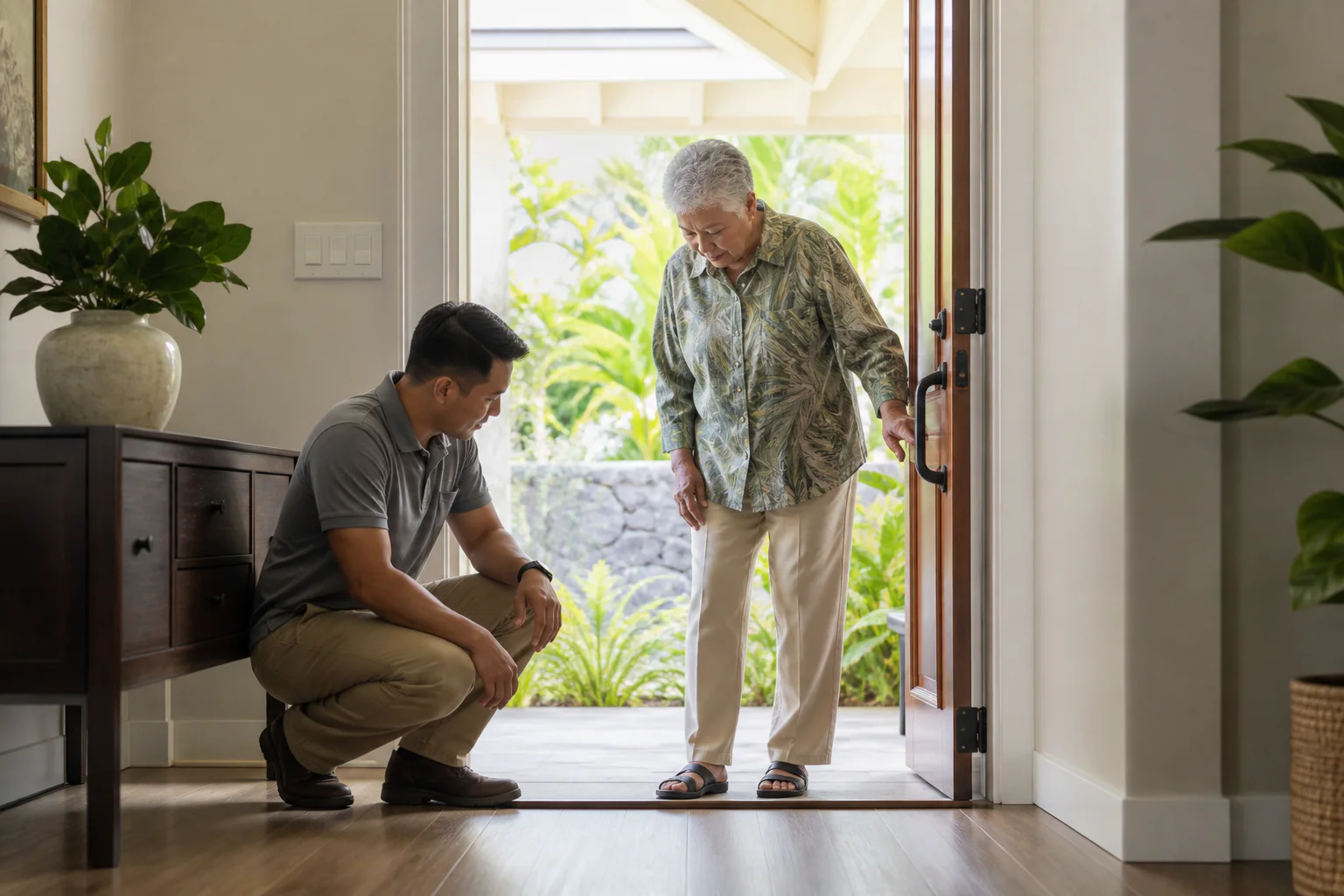
Aging in place starts with how someone lives. We look at entrances, pathways, handholds, hardware, lighting, and the routines that connect them—then help organize practical priorities around the resident's goals.
A home should support the people who use it. Planning ahead creates room to compare options, phase improvements, and respect the resident's preferences, privacy, and budget.
Make thoughtful changes before a new need turns a manageable project into an urgent one.
Consider comfort and usability as balance, stamina, reach, dexterity, vision, or mobility changes.
Think about older adults, relatives, caregivers, children, and visitors who may use the same rooms in different ways.
An isolated fix can miss the difficulty between rooms. A whole-home view considers how a person arrives, enters, moves, reaches, and uses the spaces that matter every day.
Entries, steps, thresholds, clear pathways, doors, handholds, and lighting along common routes.
Suitable handhold locations, bathing access, hardware, switches, controls, and frequently used storage.
Reach, work surfaces, appliance access, lighting, cabinet hardware, and practical space for daily tasks.
Loose components, worn seals, uneven surfaces, corrosion, and small repairs that can affect ordinary use.
CAPS stands for Certified Aging-in-Place Specialist, a professional credential administered by the National Association of Home Builders. Halepaʻa's approach applies that perspective to listening, planning, practical details, and documented work.
Discuss goals, routines, concerns, timing, and the people who use or support the home.
Organize priorities by urgency, usefulness, dependencies, budget, and the specialists a task may require.
CAPS-informed property work does not replace medical or occupational-therapy assessment, guarantee fall prevention, or certify ADA compliance. Individual clinical needs belong with qualified health professionals.
Certified Aging-in-Place Specialist is a professional credential administered by the National Association of Home Builders. Its focus includes communication, livable-home design, and practical solutions. It is not a certification of a house.
No. A more usable entrance, better lighting, or easier hardware can help residents and visitors of many ages. It can also support households planning for temporary recovery or changing mobility.
No. The right priorities depend on the resident, the building, and the available scope and budget. A walkthrough helps distinguish useful small changes from work that needs broader planning.
No. It provides practical property observations and planning. It does not certify accessibility, establish ADA compliance, or replace specialist inspection or clinical evaluation.