Designed for eligible openings
Windows, doors, and larger glazed openings need a site-specific review of size, anchoring surfaces, obstructions, access, and system limits.
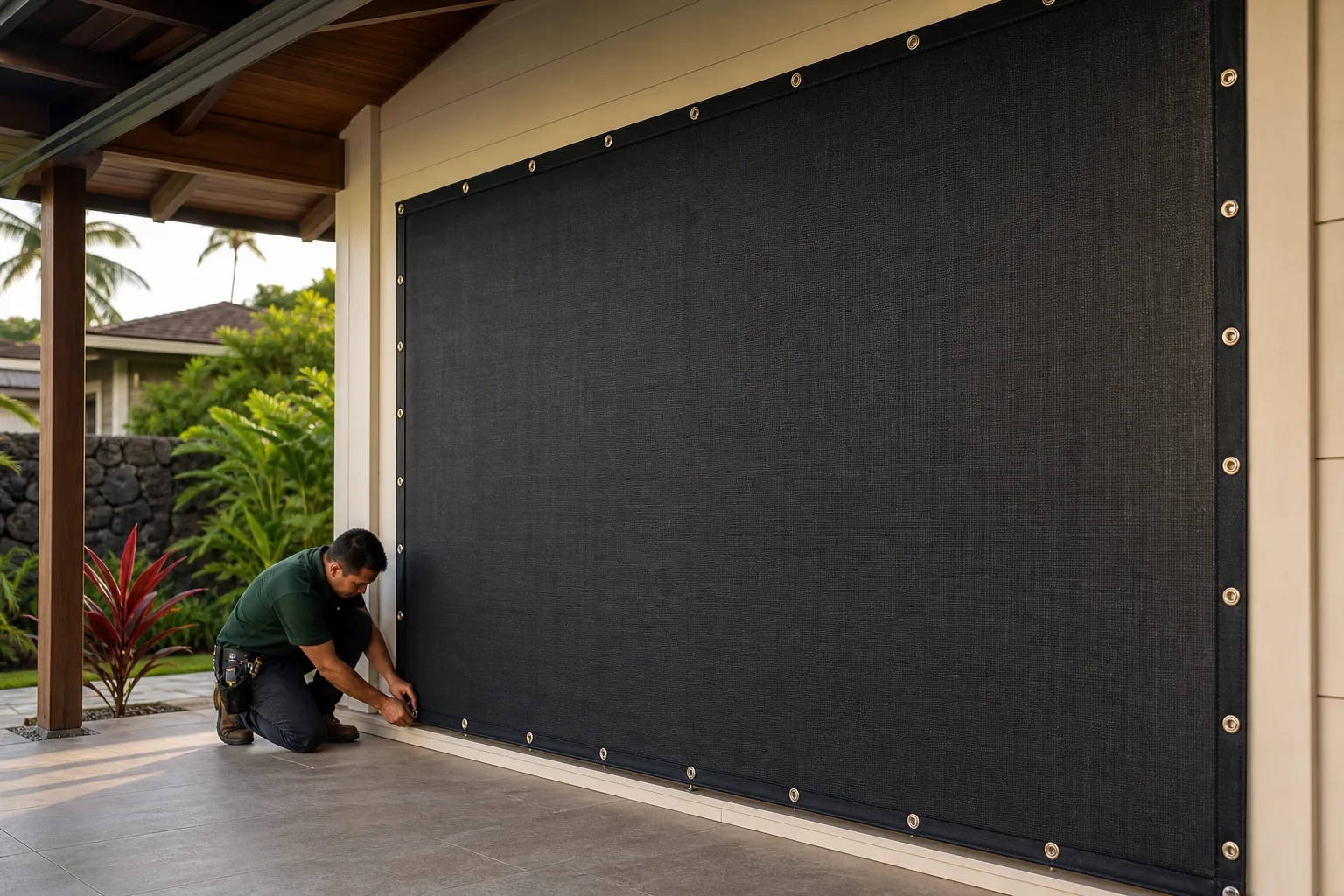
Hurricane fabric is a removable opening-protection system, designed around the panel, attachments, anchors, and building together. We begin with the opening and the applicable requirements, then plan for fit, labeling, storage, and homeowner deployment.
A high-strength woven panel works with reinforced edges, fasteners, anchors, spacing, structural substrate, and the installation method. Suitability depends on the complete selected system and the actual opening.
Windows, doors, and larger glazed openings need a site-specific review of size, anchoring surfaces, obstructions, access, and system limits.
After the threat passes, panels can be removed and stored. Clearly labeled panels and a practiced deployment plan make the system easier to use.
Ask which complete system is proposed and what testing, approved limits, attachment details, and project requirements support its use.
Opening protection takes more than a measurement. The planning process addresses the building, the system, and the person who will deploy it.
Document the opening, surrounding construction, access, and suitable anchoring surfaces; identify the system and applicable project requirements.
Plan panel coverage and attachment layout, then test-fit each approved opening with the specified hardware and installation details.
Photograph and label the panels, organize storage, and walk through attachment, inspection, and seasonal preparation with the homeowner.
Opening protection does not make a home hurricane-proof. Product, engineering, permit, and installation requirements vary with the system, building, exposure, and jurisdiction.
Fabric is not waterproof and does not stop flooding, storm surge, landslides, or water entering elsewhere.
It does not strengthen a weak roof, wall connection, garage door, or foundation, or replace evacuation orders and household emergency planning.
Performance depends on a suitable system that is correctly anchored, maintained, and deployed. Work is quoted in writing, with permit and specialty work handled by appropriately licensed professionals.
FEMA’s Wind Retrofit Guide discusses opening-protection systems. DOE/PNNL explains why impact protection and the wind pressure on the underlying door are separate considerations.
No. Panels, reinforced edges, hardware, attachment spacing, opening limits, and supporting test documentation differ. A material sample is not the same as a tested installed assembly.
Not automatically. Opening size, wall construction, anchoring substrate, edge distances, obstructions, access, and the selected system's limits all matter.
Ask your insurer before choosing a system. Any eligibility or discount depends on the insurer's requirements, product documentation, and property; it is not guaranteed.
Before a watch or warning. Surveying, documentation, fabrication, installation, test-fitting, and practice take time.